
In this Rank Math review, we’ll introduce you to the plugin, explain how it works, and discuss installation and configuration. Then we’ll talk about its features and see how it better than Yoast SEO and other popular options. Let’s get to it!
In This Article 👋
At Aussie Digital, we help website owners, agency, and freelancer install, configure, and optimize their sites smoothly. Whether you’re managing SEO for one WordPress website or Many, we are here to help!
Rank Math Introduction
Rank Math is most popular WordPress SEO plugin. Using Rank Math, you get access to tools that enable you to enhance your website content for search engines. If you’ve already used Yoast SEO or another similar plugin, you likely have a rough idea of how Rank Math works.
The plugin gives you with a seo score for each page and significant guidance for improving that score, which should help to better SEO rankings. Rank Math free version allows you add up to five focus keywords for every page. Rank Math provides you full-site audits.
Let’s Start!
How to Install and Configure Rank Math (In 3 Steps)
In this part, we’ll tell you the best way to use the Rank Math configuration wizard, and the additional settings you can change later you finish the plugin’s initial configuration. Let’s take a look at how to setup Rank Math in three easy steps:
Step 1: Through Rank Math Setup Wizard
When you initiate Rank Math, the plugin will incite you to use its configuration wizard. There are quite a few steps involved, so we’ll separate each one.
Connecting Your Account
Firstly, Rank Math requests that you to sign up for a free account on its platform. If you want to get access to the plugin’s complete set of tools, it’s a stage that you can’t skip:
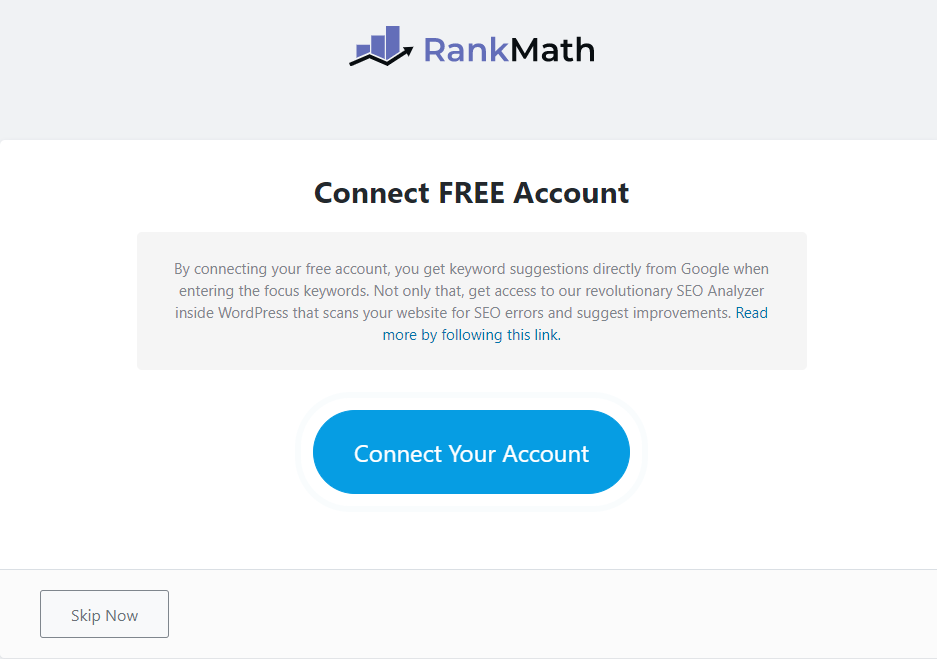
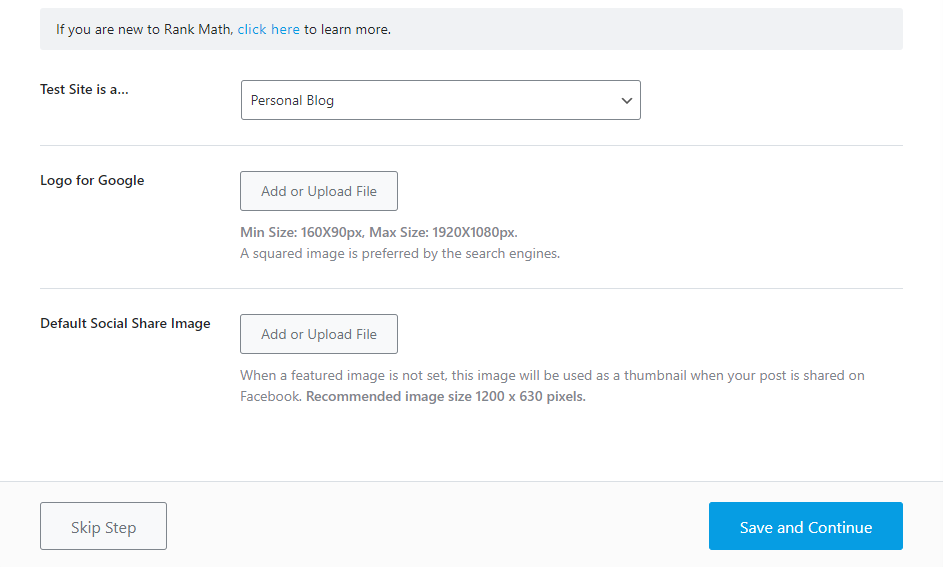
Once you connect your account, Rank Math will ask if you Easy and advanced mode with free version, we recommend choosing the Advanced Mode that get you full control over all SEO settings.
Connecting to Google Services
The next step, you’ll have the option to connect your website with Google Search Console and Google Analytics. If you’re not using both services yet, we recommend setting up accounts since they can give you priceless data.
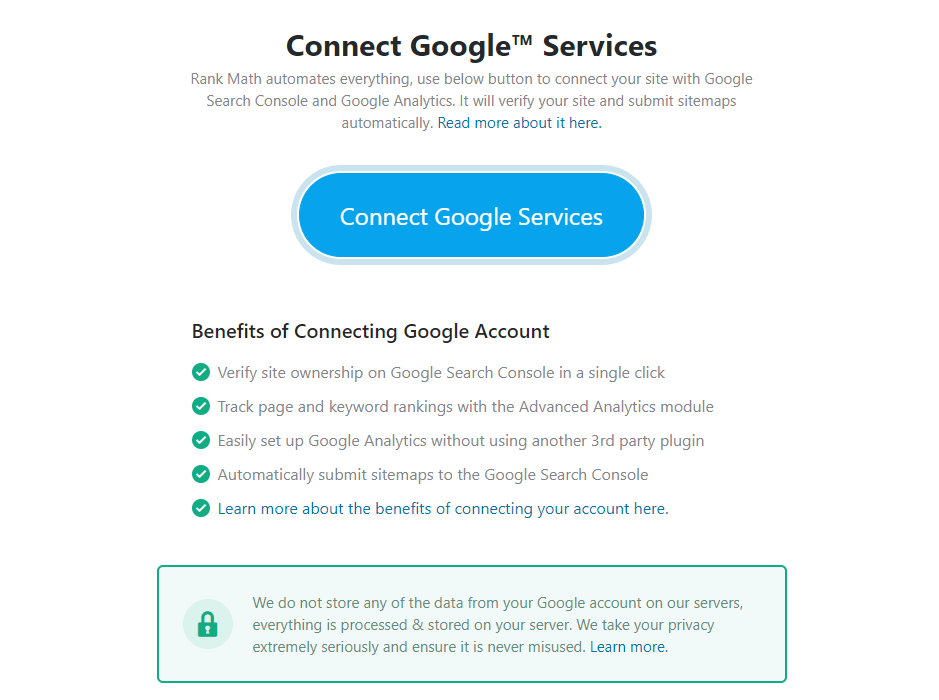
When you select Connect Google Services, you’ll be requested authorization for Rank Math to get to access your account data. Click on Allow to finish this step of the process.
Creating a Sitemap
Now, we get to the Rank Math XML sitemap. Rank Math will ask you if you want the plugin to generate a sitemap for your website, whether to include images, and what content it should map:
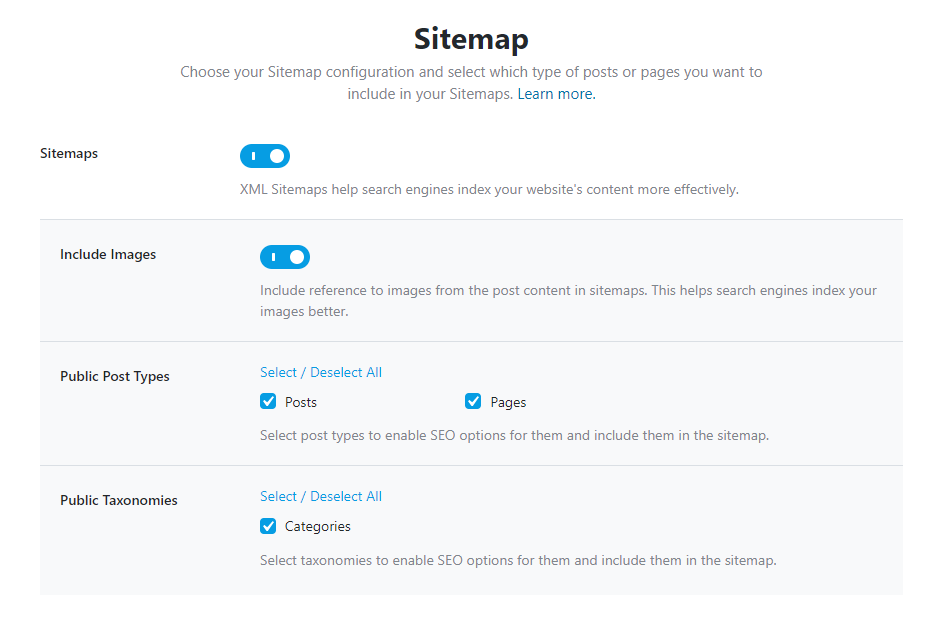
If there are any custom post types that you’d rather not include as part of your website’s sitemap, you can exclude them here. However, the rest of the default settings should work perfectly for most sites.
Rank Math will guide you through a handful of final optimizations before returning you back to the dashboard. The plugin will enable you to ‘noindex’ categories and tags with no content, as well as decide if you want to add the ‘nofollow’ attribute to external links:
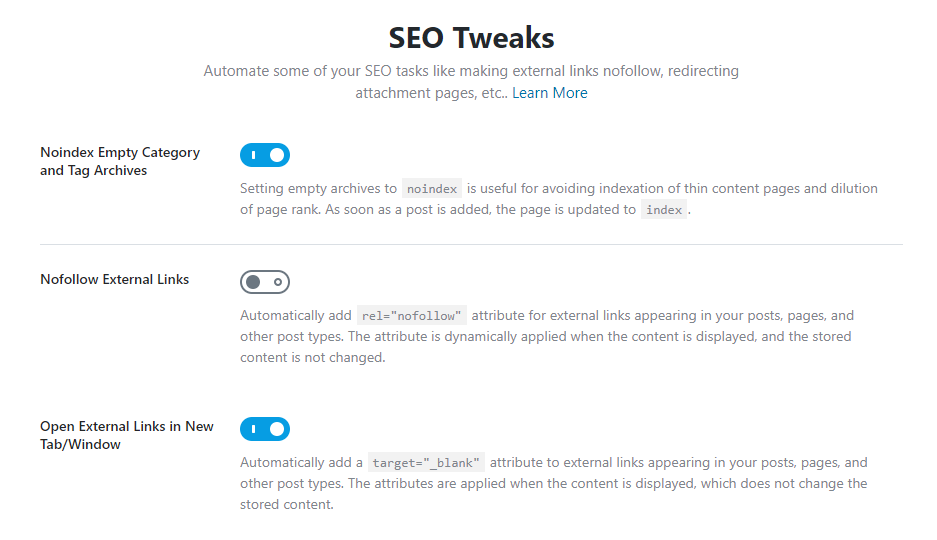
In most cases, you probably won’t want to use the nofollow attribute globally, so you can leave that option turned off for now. Next, Rank Math will ask if you want to enable automatic updates for the plugin:
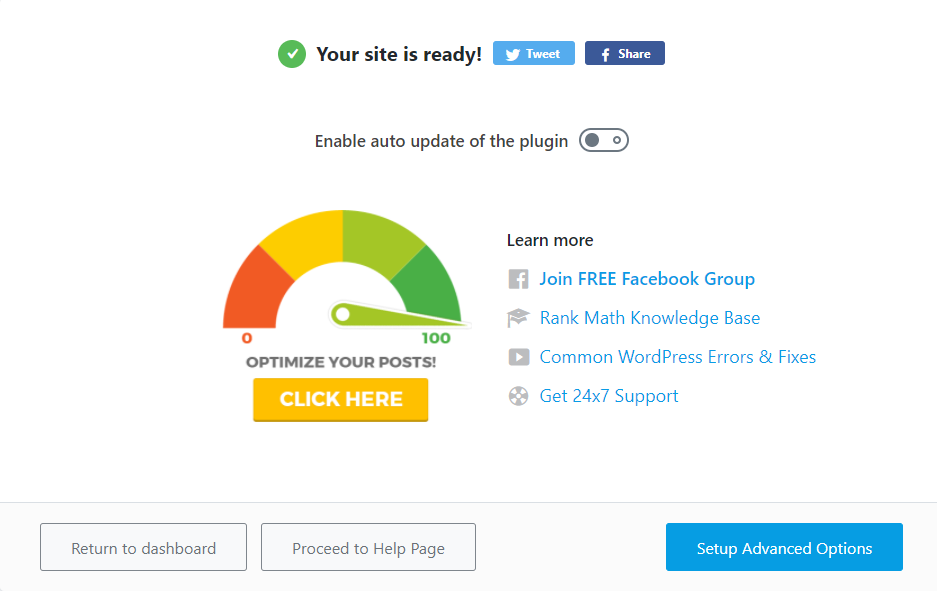
Now, you can get back to the dashboard if you need. Rank Math also includes couple of a few more advanced options inside the setup wizard.
Setting Up Advanced Options and Schema Markup
To access them, click on the Setup Advanced Options button. First, the plugin will allow you to decide which user roles should have full access to Rank Math configuration pages:
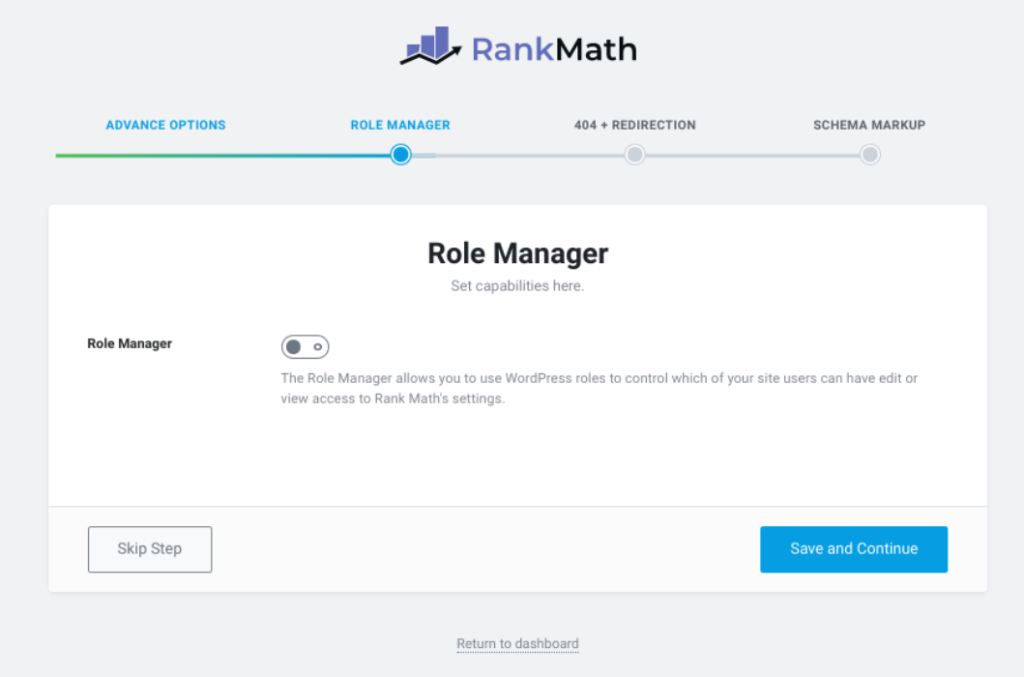
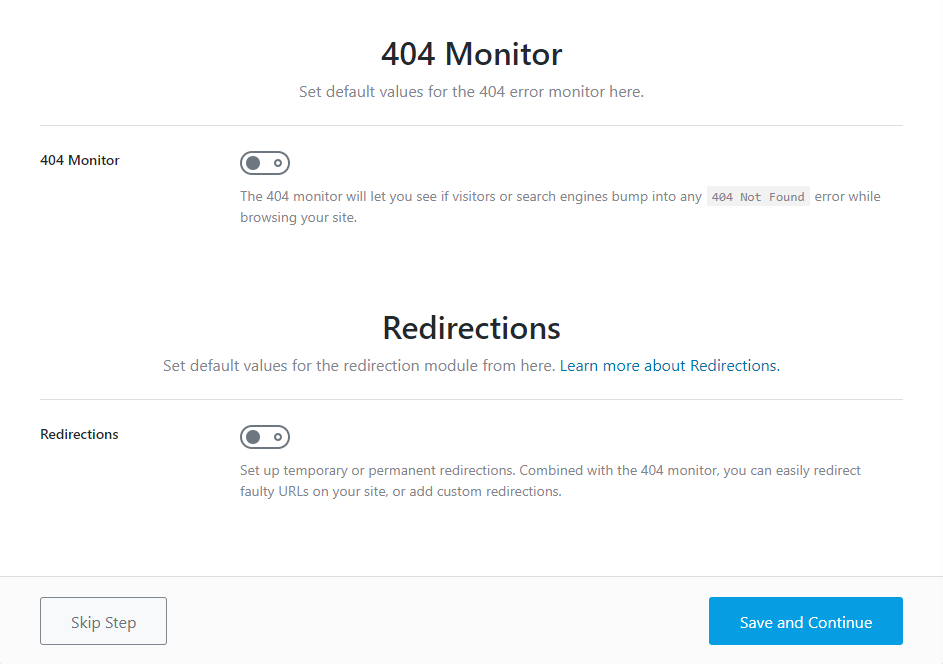
Rank Math can actively monitor your website for 404 errors, and you can enable that option. The plugin can also allow you redirects in case it detects 404 errors:
At last, Rank Math will ask you whether you want it to add schema markup to your content, which we recommend doing. Schema markup is powerful way to drive more traffic to your pages.
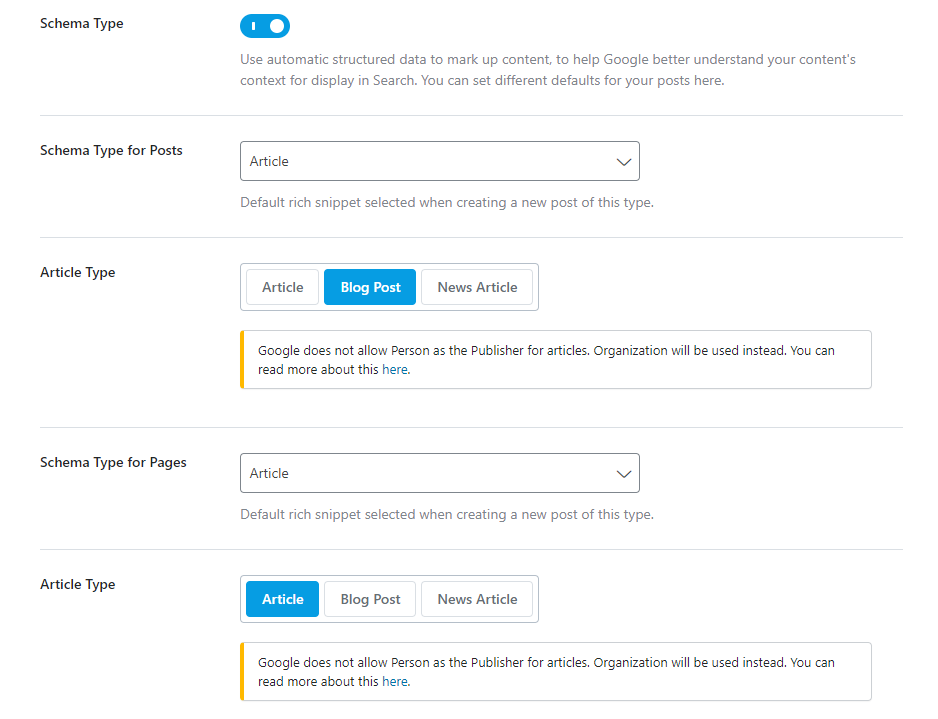
All in all, going through Rank Math’s setup wizard should only take you a few minutes. After you’re done, you can start to configure individual components for the plugin.
Step 2: Configure Individual Rank Math Modules
Rank Math uses a modular system that lets you choose which of its tools to turn on for your website. For example, you can decide whether to enable 404 error monitoring, support for Accelerated Mobile Pages (AMP), advanced options for image SEO, and more:
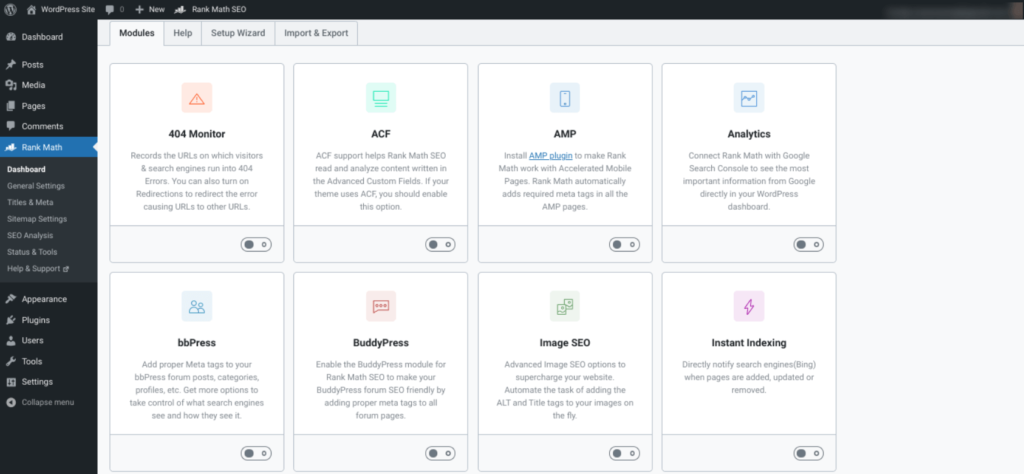
At this stage, we recommend checking out what each module does and deciding which options you want to enable for your website. For every module that you enable, you’ll get access to a new set of configuration options.
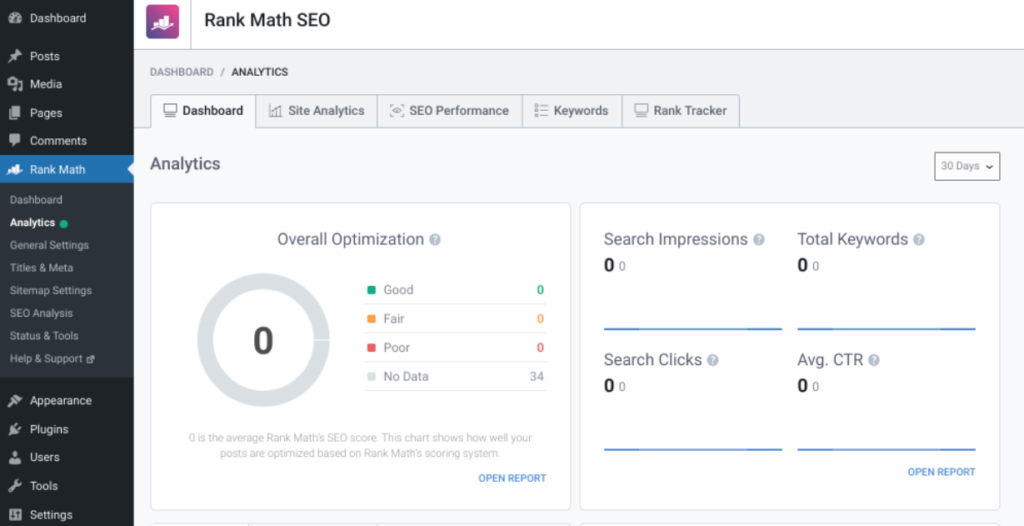
Each setting is easy to configure because Rank Math explains what it does. You don’t have to consult the plugin’s documentation at every turn. On top of each module’s settings, Rank Math will also set up a new tab where you can consult your Google Analytics data directly:
Step 3: Import Data from Other SEO Plugins
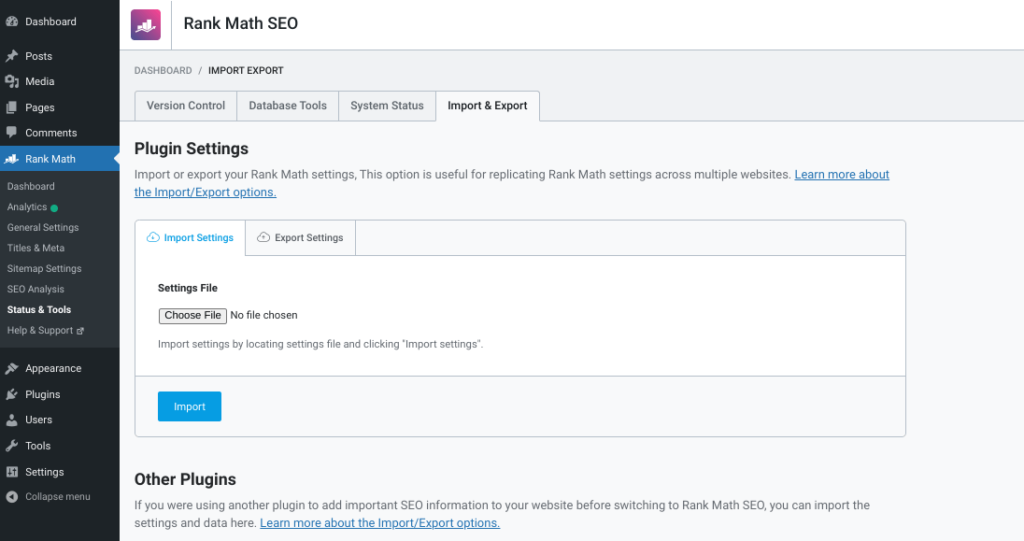
If you’ve been using another SEO plugin and want to make the switch to Rank Math, there’s an import tool that you can use. To access it, you can navigate to Rank Math > Status and Tools > Import & Export.
Here, you’ll be able to select an import file and have Rank Math pull the data it needs from it:
How to Use Rank Math for SEO 🔧
Now let’s see what the plugin offers when it comes to SEO. In the following sections, we’ll discuss how to use Rank Math for SEO, including:
Running an SEO Analysis
Understanding Your Rank Math Score
Adding Rank Math Schema Markup
Running an SEO Analysis
Running an SEO Analysis
The first step after configuring Rank Math analysis using the plugin’s SEO analyzer feature. The analysis will provide you with an overview of basic SEO ranking issues, such as:
- Broken links
- Missing page titles
- Lack of tags
- Website performance issues
- And more
To get started, you can navigate to Rank Math > SEO Analysis and click on Start Site-Wide Analysis:
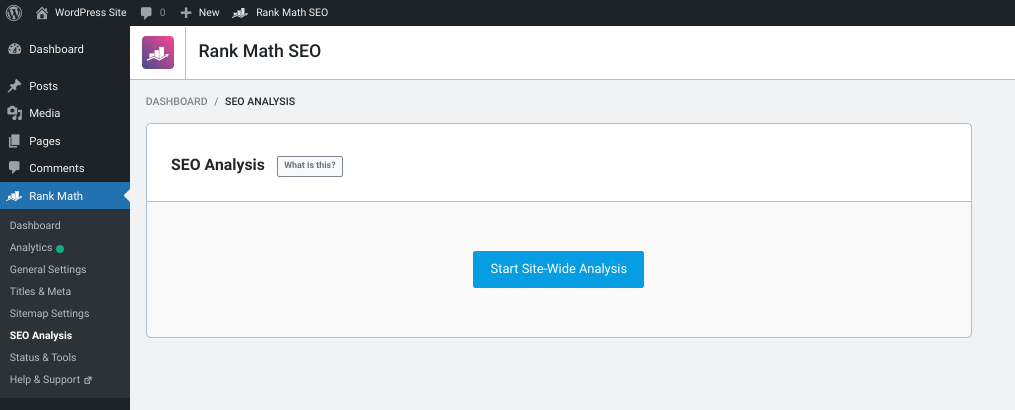
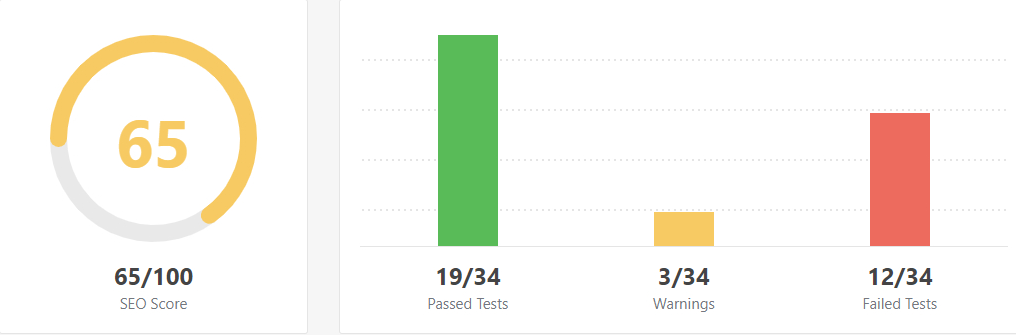
The test will run, and once it’s done, you’ll see a result score such as the following:
Understanding Your Rank Math Page Scores
If you’re using the Block Editor, you’ll see each page’s Rank Math score on the top menu, to the right side of the screen:
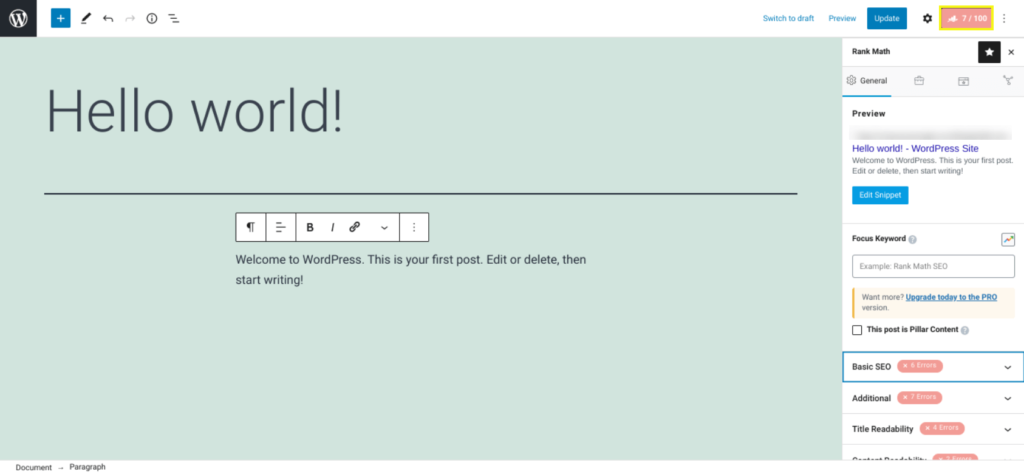
To improve both your score and overall SEO your site Score Rank Math giving some suggestions. Follow Rankmath review suggestions and improve your SEO score
Adding Rank Math Schema Markup
The same Rank Math menu includes three other tabs. One for robots.txt configuration, another for adding schema markup to your content, and a final, social media preview section.
If you use the free version of the plugin, you can add a single schema for each page.
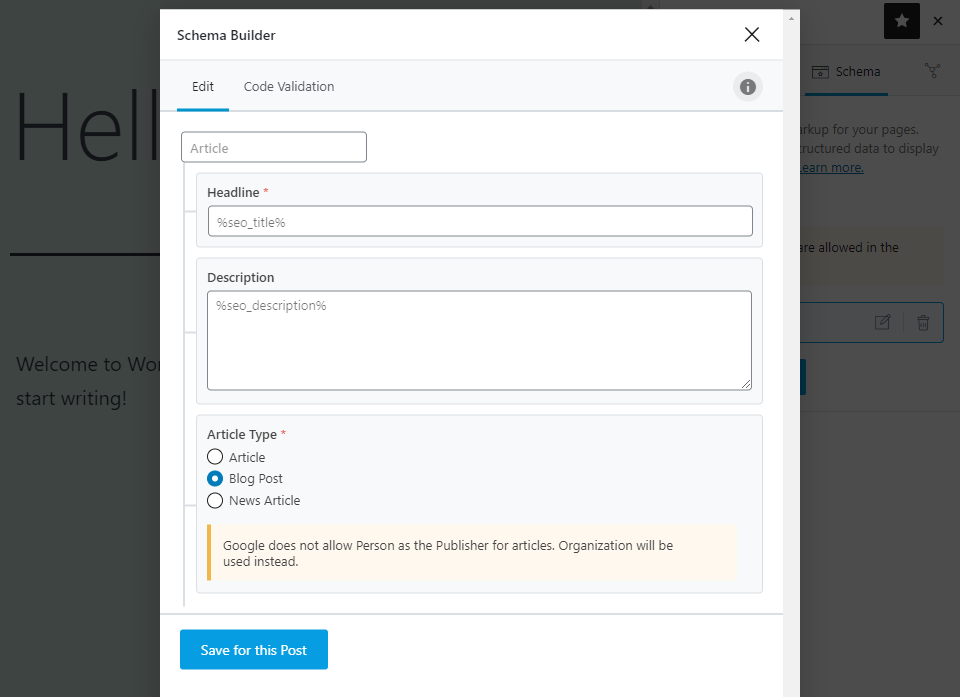
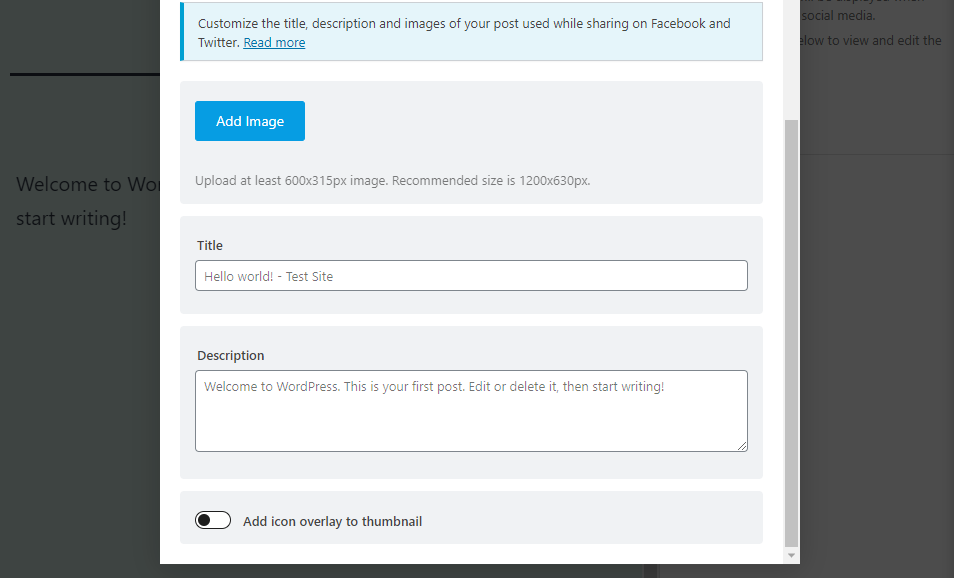
Finally, Rank Math empowers you to see how your content will look if you share it on social channels. Here, you can also replace the featured image for social networks, edit the content’s title, and modify its description:
Rank Math Review: Free vs Premium 💰
Rank Math’s free version is already one of the most comprehensive (if not the most) SEO plugin but when it comes to Rank Math premium worth considering paying for a premium license.
Some of the advantages that come with Rank Math premium include:
- A keyword rank tracker functionality
- Support for up to 500-1,000 tracked keywords (including rankings)
- More options for adding schema markup to your content
- Integration with Google Trends, News, and Video
- Tools for local SEO optimization
- Advanced options for WooCommerce SEO
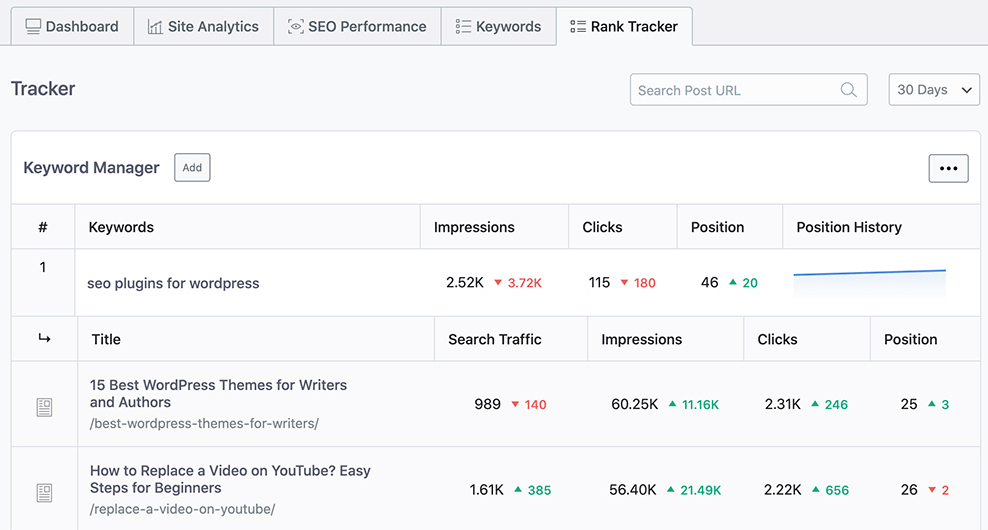
Rank Math’s keyword tracker is surprisingly in-depth. It shows you impressions, clicks, and overall position. By tracking keyword rankings, you can see whether the changes you make impact the traffic you get from search engines.
Obviously, that feature alone justifies a Rank Math premium license. Pricing starts at $59 per year, which is pretty reasonable:

If you don’t want to pay for a premium license, Rank Math’s free version is still remarkably feature-filled.
INTRODUCTION:
1. Increase of AD cost
Only a small percentage, around 1% to 5%-of people who like your Facebook page will see your updates. It is becoming more and more difficult to get in touch with users free of charge on Facebook.
Fortunately, you can publish advertising on Facebook and Facebook ads manager is user friendly. There are many positioning options, and the advertising manager is very flexible to use. You can choose different kinds of ad formats depending on their campaign objectives and goals.
Although creating an ad does not guarantee that your target audience will click or even see it, you can try different ad types to optimize your ad’s effectiveness. Lately, carousel ads have been growing among Facebook advertisers as it allows advertisers to display multiple products in one advertisement. So that there are more chance to get the audience’s awareness and attracted by your products.
After all, you still need to spend more money to drive traffic. This can range from $5 to $300 to benefit 500 to 50,000 target people.
You can also use advanced goals to reach out to potential customers who are not your social media followers. Facebook’s lookalike audience can help you target your ideal customers. You can use Facebook pixel to generate your website’s lookalike audience and reach those target audience.
If you have done advertisements in the past, please review those advertisements’ result. They help you to establish a benchmark for your upcoming Facebook Ads advertisements campaign and review if you are on the right targeting options. At the same time, you should focus on advertising your company’s current goals instead of sticking to your past goals.

2. More difficult to understand target audience
The privacy changes brought by Apple’s iOS 14 update increase the difficulty of locating target audience. Facebook is not able to track user behaviour affects the effectiveness of the tracking pixel and all of its implications is severely diminished. This results in inaccurate reporting for conversions all the way down to ineffective remarketing.
In addition, some brands create content first, and then determine the target audience. They have a misconception that great content will be transformed even if it is not targeted. Although good content will attract people, if it is not tailored for your target audience, it may not generate clues.
Use your collected insights to establish personal contact with customers and create more attractive content. You can also create new custom audience in your account using the viewing data. In addition, you can also add value to your community by investing in influencer marketing, you can contact us for a private consultation.

3. Harder to enhance engagement
The organic influence of leading social platforms is plummeting. Average participation in unpaid branded content on Instagram is currently only 0.31%. The research also shows that if a brand post only once a day, the participation will drop significantly. Fortunately, using free social media management tools, creator studio, can help you automatically arrange your posts and easily share your blog content with Facebook.
If you want to get a lot of participation in Facebook, publishing video ads are the way to bring about remarkable results. The video views can lead you to reach more target audience. Optimize your social content for the right specifications and release time.
All your social content in cross-promotion organically catches more eyeballs, sponsors influential content, and enhances brand awareness. You can also consider using User Generated Content (UGC) as a social proof of your brand’s credibility. Brands can organize giveaways to generate more UGC.
4. Conclusion
Now to make your Facebook page outstanding and attract more audience is easy, simply find your Facebook specialist and let them to help you. Weboost specialise in website design, website development, mobile application development, search engine optimization (SEO), social media marketing, and more. Contact us today to personalise a social media marketing plan.